
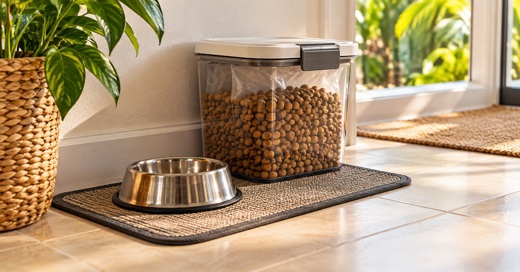
Pet feeding areas and pest prevention can be considered together without changing the care your animal needs. A food bag, scoop, feeding mat, and nearby cabinet give you several useful places to check when insects keep appearing. Start with storage and observations, and keep feeding and hydration needs first. For recurring pest activity, call JP Miller & Sons Services, Inc at (954) 874-8897 or schedule an inspection online.
Review the Food Bag and Storage Location
FDA recommends storing dry pet food in its original bag with the top tightly folded down, in a cool, dry place. Keep product information available so you know what is in the container. If you use an outer bin, choose one that closes properly and can hold the bag without hiding its label.
Check the accessible storage area for spilled food, damaged packaging, dampness, or insects. Record where you found the concern and whether it involves the food, the outside of the bag, or the surrounding shelf. Do not combine questionable food with a new supply or assume every insect near a container came from it.
Make Bowl and Scoop Cleanup Routine
FDA advises washing pet-food bowls and scooping utensils with soap and hot water after each use. Use methods suitable for the bowl, utensil, and feeding surface. Let cleaned items dry as appropriate before returning them to storage, and avoid leaving ordinary food debris around the mat.
Choose a routine that is practical for the people who feed the pet. Keep a dedicated scoop with the supplies and agree on who checks for spilled food. If a container is hard to close or a mat is difficult to clean, include that problem in the household plan rather than repeatedly working around it.
Keep Pet Care Needs First
Discuss feeding schedules or special dietary needs with the appropriate veterinary professional. Do not withhold necessary food or drinking water to address a pest concern. An animal’s care plan, medications, and access requirements should not be changed on the basis of general pest-prevention advice.
Tell the pest professional where bowls and stored food are kept and whether the area is used throughout the day. Explain automatic feeders or other equipment that affects access. That information can help the professional plan an inspection and discuss directions that are workable for the household.
Describe the Pest Pattern Clearly
UF/IFAS cockroach guidance includes tightly sealed pet food among its food-source recommendations. That does not identify an insect seen by a bowl. Note what you actually observe: the location, time, number of sightings, and whether the same activity appears in other rooms.
Take photos from a safe position without handling unknown insects. Include recent cleanup, changes in storage, and any pest products already used. A short log is often easier to discuss than a general description that the pet area is attracting bugs.
Keep Products Separate From Feeding Supplies
Store and use pest-control products only as labeled, and keep them away from pet food and feeding utensils as directed. Do not place a treatment near a bowl or feeder merely because insects were seen there. Identification and the labeled use site should guide any treatment decision.
If service is recommended, ask how to prepare the feeding area, protect supplies, and follow all access or reentry directions. Arrange a suitable place for the animal during service according to those instructions. Continue to record any recurring activity so follow-up is based on what is happening at the property.
JP Miller & Sons Services, Inc serves Broward and Palm Beach Counties. Learn about our residential and commercial pest-control services or contact us to discuss your property.
Further reading: FDA: Tips for Safe Handling of Pet Food and Treats; UF/IFAS: Cockroaches and Their Management.
What You Can Do Before the Visit
- Keep product information: Retain the original food bag and its label when using an outer storage bin.
- Clean bowls and scoops: Follow FDA guidance and cleaning directions suitable for the materials.
- Explain the care routine: Tell the technician where feeding equipment is used; do not restrict necessary food or water.
Always follow product labels and keep children and pets away from treatment areas as directed. For active infestations, termites, wildlife, or uncertainty about safe treatment, contact a licensed pest-control professional.
AI-generated photo illustration of a household prevention scenario; not a photograph of company staff or completed work.