
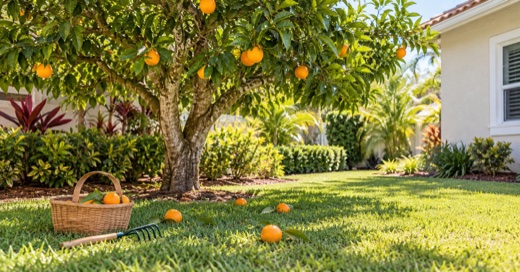
Fruit trees and pest prevention deserve a place in a routine yard walk, especially when you notice activity close to the house. The useful question is not whether a tree is automatically a problem. It is what is happening around the fruit, branches, and nearby entry areas at your particular property. For recurring pest activity, call JP Miller & Sons Services, Inc at (954) 874-8897 or schedule an inspection online.
Begin With What Is on the Ground
UF/IFAS recommends removing rotting or fallen fruit as part of landscape sanitation. Walk the accessible area beneath the tree and note whether fruit is collecting near a doorway, wall, or storage area. Use suitable ordinary collection tools without reaching into dense vegetation or an area with active stinging insects.
Set a collection routine that fits the property and use normal local yard-waste or household disposal procedures. Ask the appropriate local service about unusual waste concerns. Do not leave a collected pile beside the house and assume moving it a few feet has addressed the issue.
Observe Where Branches Meet the Building
UF/IFAS explains that limbs touching or overhanging a house can provide access for some pests. From the ground, look for branches contacting a roof, screen enclosure, window area, or exterior wall. A photo showing the branch and its relationship to the building can be useful when arranging an evaluation.
Leave high pruning, ladder work, and branches near electrical lines to qualified professionals. Do not climb onto a roof to follow an animal or insect. Before changing a tree or landscape, discuss the appropriate work with a qualified tree or landscape professional and consider the mature plant, rather than guessing a universal clearance.
Describe Activity Without Assuming the Cause
Record what you can actually observe: insects on leaves, repeated movement along a branch, damaged fruit, or activity near a doorway. Keep the date, location, and a photo together. Avoid identifying a pest solely from a distant image or deciding that every insect on the tree needs treatment.
An issue affecting fruit or foliage may call for different expertise from a pest entering the house. Explain both parts of the concern when asking for help. Clear observations can make that conversation more useful without turning a yard walk into a diagnosis.
Include the Surrounding Setup
Review the accessible items around the tree: harvest baskets, storage containers, yard equipment, and the route between the yard and house. Keep ordinary stored belongings arranged so you can see and use the area. Note anything that is repeatedly wet or prevents safe access for an inspection.
Coordinate with household members or a landscape service so everyone knows which observations need follow-up. Record when fruit was collected or maintenance occurred. That timeline can help you explain whether activity continued after a particular change instead of relying on memory.
Ask About the Right Inspection and Follow-Up
If pest activity persists near the building, describe the tree location, the areas affected, and any recent landscaping or pest service. Ask which parts of the property can be evaluated and what additional information would help. Share the names and dates of any products already used.
Avoid applying a household pest product to a fruit tree or edible crop unless the label specifically permits the crop and use. Product directions, including any relevant harvest restrictions, must be followed. A professional can help distinguish a structural pest concern from a plant-care question and explain appropriate next steps.
JP Miller & Sons Services, Inc serves Broward and Palm Beach Counties. Learn about our residential and commercial pest-control services or contact us to discuss your property.
Further reading: UF/IFAS: Landscaping Methods to Prevent Pests from Entering Your Home; EPA: Do's and Don'ts of Pest Control.
What You Can Do Before the Visit
- Collect accessible fallen fruit: Use ordinary safe collection methods and normal local disposal procedures.
- Photograph contact points: Record branches touching the building from the ground; leave unsafe pruning to qualified help.
- Keep a simple timeline: Note activity, fruit collection, landscape work, and any pest products used.
Always follow product labels and keep children and pets away from treatment areas as directed. For active infestations, termites, wildlife, or uncertainty about safe treatment, contact a licensed pest-control professional.
AI-generated photo illustration of a household prevention scenario; not a photograph of company staff or completed work.