
Fire ant activity in South Florida yards can change quickly after rain, irrigation, or landscaping work. Mounds may appear in lawns, along pavement, near utility boxes, or in other sunny areas. If you are seeing repeated mound activity, call JP Miller & Sons Services, Inc at (954) 874-8897 or schedule an inspection online.
What a Fire Ant Mound Can Look Like
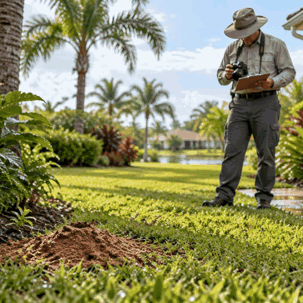
A fire ant mound often appears as loose, freshly moved soil without an obvious opening at the center. The shape varies with soil and weather. Some mounds are low and spread out, while others become more visible after the colony moves soil toward the surface.
A mound alone does not confirm the species. Several ants build nests in soil, and treatment choices depend on accurate identification. Observe from a distance and note the ants’ size, color, movement, and the location of the mound.
Why You Should Not Disturb the Mound
Fire ants can respond rapidly when a nest is disturbed. They may move onto shoes, tools, or skin before the person realizes how many ants are present. Avoid kicking, flooding, digging into, or standing directly over a suspected mound.
Keep children and pets away from the area until it can be evaluated. If someone experiences a concerning reaction after a sting, seek medical guidance. Pest-control advice is not a substitute for medical care.
How Rain and Yard Work Affect Activity
South Florida rain can make mounds easier to notice as ants move soil or relocate within the nest. Irrigation changes, sod installation, edging, and other yard work can also expose activity that was previously less visible.
Walk the property after heavy rain or landscaping work and look for new soil piles, especially near high-use areas. Do not assume that flattening a mound resolved the colony. Mark the location from a distance so it can be found again during an inspection.
What Homeowners Can Document
- How many mounds are visible and where they are located
- Whether activity is near walkways, play areas, pet areas, or equipment
- When the mound first appeared
- Whether activity increased after rain, irrigation, or yard work
- Any products already applied and the date of application
Photos taken from a reasonable distance can help document changes over time. Avoid close-up handling or direct contact for the sake of a photograph.
Why Treatment Depends on the Property
A single visible mound may be part of wider activity across the yard. The appropriate approach depends on identification, the number and placement of mounds, property use, and prior treatments. A technician can inspect the site and explain whether a targeted or broader yard treatment is appropriate.
Follow product labels and avoid applying several products to the same area without understanding how they interact. If a service is scheduled, tell the technician what has already been used.
When to Request Professional Help
Consider an inspection when mounds keep returning, when several areas are active, or when nests are close to places used by children, pets, customers, or employees. JP Miller & Sons Services, Inc provides fire ant inspection and treatment planning for Broward and Palm Beach properties.
What You Can Do Before Treatment
- Monitor Mound Activity: Check the yard from a distance and note new or expanding mounds. Before calling
- Avoid Disturbing Mounds: Do not kick, dig into, flood, or stand over a suspected fire ant mound. Keep children and pets away from the area until it can be evaluated.
- Record Mound Locations: Mark mound locations from a distance so they can be found during an inspection. Before calling
- Photograph Changes: Take photos from a reasonable distance to document changes after rain or yard work. Avoid close-up handling or direct contact for a photograph.
Always follow product labels and keep children and pets away from treatment areas as directed. For active infestations, termites, wildlife, or uncertainty about safe treatment, contact a licensed pest-control professional.