
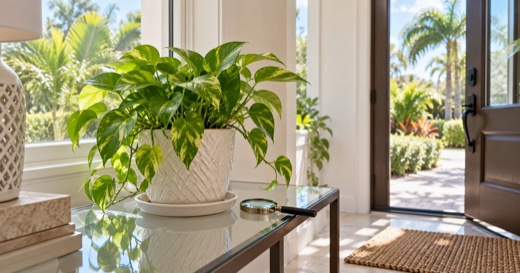
Holiday houseplant pest checks can fit into the same preparation list as food, seating, and deliveries. A plant received as a gift or bought for a table deserves a closer look before it joins an established indoor collection. In South Florida, focus on the plant and its container rather than assuming every small insect is the same household pest. For recurring pest activity, call JP Miller & Sons Services, Inc at (954) 874-8897 or schedule an inspection online.
Look Before Choosing the Display Spot
UF/IFAS recommends carefully examining plants when purchasing them and keeping a new plant apart from other plants for at least a month after bringing it home. Plan that separate observation area before arranging a holiday display. A quick check on the doorstep does not establish that a plant has no pests.
In adequate light, look at accessible leaves, stems, the pot exterior, and its saucer without handling unknown insects. Photograph anything that concerns you and keep the plant label or purchase information. If the pot is heavy, unstable, or difficult to reach, arrange help rather than tipping it to inspect the bottom.
Keep Care Instructions With the Plant
Ask about the particular plant’s light, water, and drainage needs. UF/IFAS houseplant guidance emphasizes adequate container drainage and avoiding a pot standing in water. A decorative outer container can make the water level difficult to see, so include it in an ordinary care check.
Do not adopt one watering schedule for every holiday plant. Keep its care instructions with the household notes, and decide who will check it while visitors are in the home. Plant suitability around children or pets is a separate care question to resolve before choosing a display location.
Describe Small Flies Without Guessing
UF/IFAS explains that fungus gnats are associated with moist potting soil and recommends examining new houseplants and avoiding accumulated, stagnant water. That is a reason to record the conditions around a plant, not a reason to identify every tiny fly by its size alone.
Note whether insects are repeatedly seen at the soil surface, around the pot, near a window, or elsewhere in the room. Include dates and clear photographs taken safely. Keep observations about several plants separate so that a professional can understand which location is involved.
Separate Plant Advice From Household Treatment
A problem on foliage or in potting mix may call for plant-care or Extension guidance. Activity spreading through the kitchen or another part of the building may need a household pest inspection. Explain both the plant concern and the room-by-room pattern when requesting help.
Avoid spraying a general household product on a plant merely because an insect is visible. EPA guidance says to follow pesticide labels and their permitted use sites. Do not mix products or assume a product suitable outdoors is suitable inside the home, on a plant, or near food.
Make the Holiday Handoff Practical
If a plant will move to another household, share relevant observations and any treatment record rather than describing it as pest-free. Keep service directions and the product name available if something has already been applied. Avoid repeatedly moving a plant between rooms while an unresolved concern is assessed.
After the gathering, revisit the observation notes and the plant’s ordinary care plan. Request identification or an inspection if activity persists. A useful follow-up explains what changed, what continued, and where the concern now appears without promising that one housekeeping step will resolve every situation.
JP Miller & Sons Services, Inc serves Broward and Palm Beach Counties. Learn about our residential and commercial pest-control services or contact us to discuss your property.
Further reading: UF/IFAS: Caring for Houseplants; UF/IFAS: Indoor Beelzebub - fungus gnats; EPA: Do's and Don'ts of Pest Control.
What You Can Do Before the Visit
- Plan a separate area: Keep a new plant apart from established houseplants while following the observation guidance for it.
- Check the container: Review accessible pots and saucers, drainage, and the plant’s own care instructions.
- Record the location: Photograph activity safely and distinguish the plant concern from sightings elsewhere in the home.
Always follow product labels and keep children and pets away from treatment areas as directed. For active infestations, termites, wildlife, or uncertainty about safe treatment, contact a licensed pest-control professional.
AI-generated photo illustration of a household prevention scenario; not a photograph of company staff or completed work.