
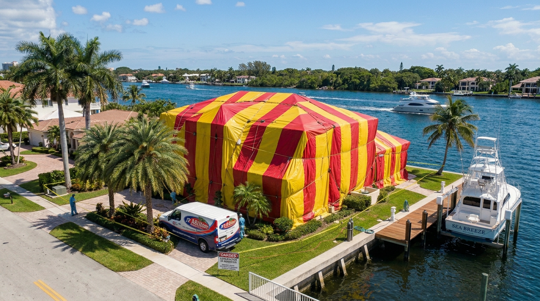
How to Know When You Need a Termite Fumigation
Finding signs of termites can be unsettling, especially in South Florida homes where warm, humid conditions can support termite activity year-round. The good news is that not every termite problem requires fumigation. The right solution depends on the termite species, where the activity is located, and how widespread the infestation has become.
For homeowners in Broward and Palm Beach counties, a professional termite inspection is the clearest way to determine whether fumigation is necessary or whether a more targeted treatment may be appropriate.
What Is Termite Fumigation?
Termite fumigation is a whole-structure treatment used to address certain termite infestations inside a home. During fumigation, the structure is enclosed and treated with a fumigant designed to reach termites in concealed areas, including wall voids, attics, furniture, and other hard-to-access spaces.
Fumigation is commonly recommended when drywood termites are active in multiple areas of a structure or when localized treatments are unlikely to fully reach the infestation. It is different from soil treatments typically used for subterranean termites.
Signs You May Need a Termite Fumigation
Only a trained inspection can confirm the right treatment, but these signs are worth taking seriously:
- Termite droppings, also called frass: Drywood termite droppings often look like small, hard pellets near baseboards, windowsills, furniture, or attic spaces.
- Small holes in wood: Tiny openings in trim, door frames, cabinets, beams, or wood furniture may be exit holes created by termites.
- Discarded wings: Finding groups of matching wings near windows, doors, lights, or vents can indicate that termites have swarmed nearby.
- Hollow-sounding or damaged wood: Wood that sounds hollow when tapped, flakes easily, or appears blistered may have hidden termite damage.
- Activity in more than one area: Signs in several rooms, on multiple levels, or in both structural wood and furniture can point to a broader drywood termite issue.
- Recurring termite signs after spot treatment: If signs return after a localized treatment, the colony may be present in areas that were not reached.
When Fumigation May Be the Best Option
A termite professional may recommend fumigation when an infestation is widespread, difficult to locate, or present in multiple concealed areas. It can also be appropriate when drywood termites are found throughout a home rather than in one limited, accessible location.
Fumigation may be considered when:
- Drywood termite activity is found in several parts of the structure.
- The exact extent of the infestation cannot be determined with confidence.
- Termites are active in inaccessible areas such as walls, attics, or roof framing.
- There are signs of multiple colonies.
- A whole-home approach is more practical than treating several separate locations.
That does not mean fumigation is automatically the answer. A small, isolated infestation may be treatable with a targeted approach. The goal should be to match the treatment to the problem, not to recommend more service than your home needs.
Drywood Termites vs. Subterranean Termites
Knowing the type of termite matters because treatment methods differ.
Drywood Termites
Drywood termites live inside dry wood and do not need contact with soil. They are often associated with pellet-like droppings and may infest trim, framing, cabinets, doors, windows, and wood furniture. Whole-structure fumigation is often used for widespread drywood termite infestations.
Subterranean Termites
Subterranean termites typically travel between the soil and a structure. They may build mud tubes on foundations, walls, plumbing penetrations, or other surfaces. Treatment often focuses on the soil, entry points, and areas where termites are traveling rather than fumigating the entire home.
Because the signs can overlap, it is important not to assume the termite type based on one clue alone.
What Happens Before a Fumigation?
If fumigation is recommended, your pest management team should explain the process clearly before treatment begins. Preparation requirements can vary by home and treatment plan, but homeowners commonly need to arrange for people, pets, plants, and certain items to be out of the structure during the fumigation period.
You should receive practical instructions covering items such as food, medications, pet supplies, aquariums, keys or access arrangements, and re-entry timing. Ask questions if anything is unclear. A dependable provider should make sure you understand what needs to be done before treatment and when it is safe to return.
What Fumigation Does and Does Not Do
Fumigation is designed to eliminate active termites present in the structure at the time of treatment. However, it does not repair existing termite damage, and it is not a substitute for ongoing inspection and prevention. After treatment, homeowners should continue to watch for moisture issues, wood-to-soil contact, gaps around utility lines, and other conditions that can make a property more inviting to pests.
When to Schedule a Termite Inspection
It is a good idea to schedule an inspection if you see droppings, wings, mud tubes, damaged wood, or any unexplained changes around wood features in your home. You should also consider an inspection before buying or selling a property, after a swarm, or if your home has had termite activity in the past.
Early identification gives you more treatment options. Waiting for visible damage to worsen can make a termite problem harder to manage.
Get Straight Answers About Your Termite Concern
JP Miller & Sons Services, Inc. helps homeowners in Broward and Palm Beach counties evaluate termite concerns and understand their treatment options. If you have noticed possible termite activity, a professional inspection can help determine whether fumigation, a targeted treatment, or another approach makes sense for your home.
Contact JP Miller & Sons Services, Inc. to discuss your termite concerns and schedule an inspection.